Following the announcement of a ceasefire between Israel and Hamas, humanitarian aid to the Gaza Strip has begun to flow once again, with the United Nations and established faith-based agencies at the forefront of relief efforts. This renewed access to Gaza comes after months of severe restrictions that had brought the region to the brink of a humanitarian catastrophe.
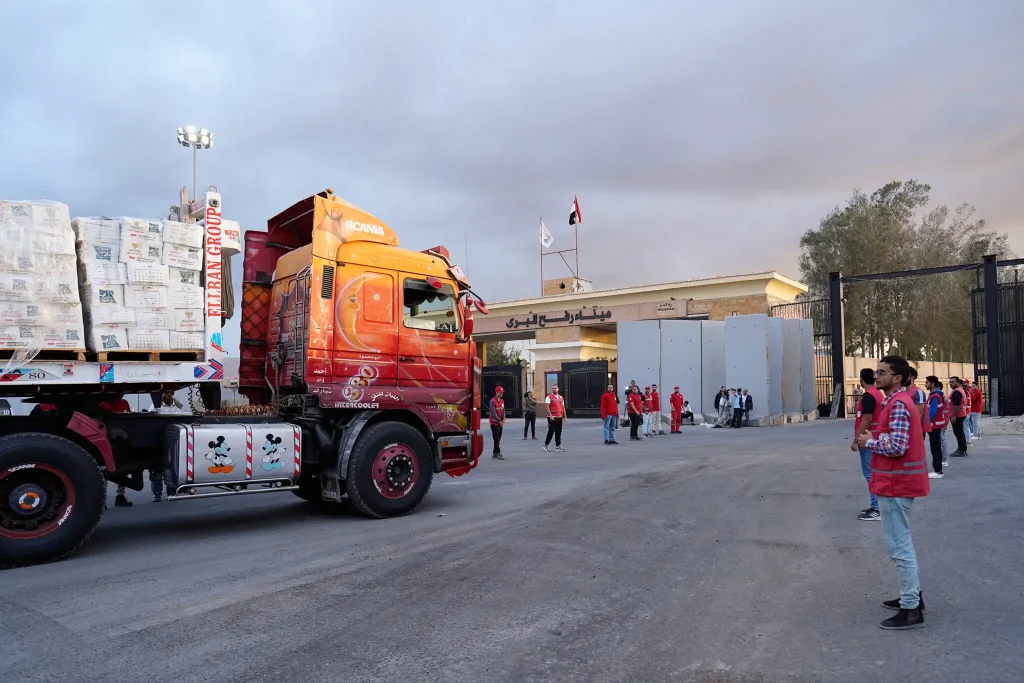
The ceasefire has paved the way for critical supplies to enter Gaza, including cooking gas, frozen meat, fresh fruit, flour, and essential medicines. For the first time since March, these vital goods have crossed into the territory, signaling a potential easing of the dire conditions faced by the Palestinian population. The United Nations Office for the Coordination of Humanitarian Affairs (OCHA) reported this breakthrough, marking a significant milestone after an 11-week halt in humanitarian relief caused by a broken ceasefire agreement in mid-March.
Israel’s restrictions during the conflict severely limited aid deliveries, contributing to widespread starvation and deteriorating living conditions in Gaza. Even as limited aid trickled in over recent months, the humanitarian situation remained critical. The United Nations has now outlined an ambitious 60-day plan to scale up its response dramatically. This includes distributing food and medicine at a larger scale, repairing water and sewage infrastructure, and providing thousands of tents and tarps to shelter displaced residents amid rubble and destruction.
Tom Fletcher, the UN’s undersecretary-general for humanitarian affairs, expressed confidence in the plan’s feasibility, emphasizing the UN’s experience in delivering aid under challenging circumstances. “This is the plan. We can deliver it. We’ve done it before, and we will do it again,” he stated, underscoring the urgency and commitment to addressing Gaza’s humanitarian crisis.
One notable aspect of the current aid landscape is the sidelining of the Gaza Humanitarian Foundation (GHF), a private entity established by the United States and Israel to bypass UN channels, amid accusations that Hamas was diverting aid. President Trump’s 20-point ceasefire plan explicitly names the UN, the Red Crescent, and other recognized international bodies as responsible for aid delivery, excluding the GHF from official mention.
The GHF had operated four militarized distribution sites guarded by Israeli forces and U.S. contractors. These sites became flashpoints of violence, with over 1,000 Palestinians reportedly killed near their perimeters. Recently, Palestinians dismantled three of these sites, removing fencing and structures, signaling a rejection of the militarized aid model. Although the GHF denies shutting down, it acknowledges tactical changes and temporary closures of some distribution points, leaving its future role uncertain.
This shift raises critical questions about the acceptability and effectiveness of militarized aid distribution in Gaza. Many Palestinians appear to prefer the UN’s civilian delivery system, which operated approximately 400 distribution locations before the conflict. The UN’s more neutral and widespread network may offer safer and more accessible aid channels for Gaza’s vulnerable population.
Faith-based organizations are also playing a crucial role in the humanitarian response. Samaritan’s Purse, which had partnered with the GHF to provide food packets and first aid, has temporarily suspended flights to the region, awaiting clarity on how best to proceed under the new ceasefire conditions. Ken Isaacs, the group’s vice president, described their stance as a “wait-and-see holding pattern,” emphasizing the desire to assist Gazans effectively once the peace agreement’s details solidify.
Catholic Relief Services (CRS), a long-standing humanitarian actor in Gaza, is actively ramping up its operations. With a dedicated staff of 65 Gazan residents, CRS had faced significant delays due to Israeli restrictions but now sees an opening to accelerate aid delivery. Bill O’Keefe, CRS’s executive vice president for mission and advocacy, highlighted efforts to bring in shelter materials stored in Jordan and Egypt, secure additional warehouse space, and reopen their Gaza City office to meet urgent needs.
The lifting of aid restrictions has been widely welcomed by humanitarian groups, though uncertainties remain about how many access points will be opened and how smoothly aid will flow. O’Keefe expressed hope for broad access, recognizing that multiple entry points are essential to reach the diverse and dispersed population of Gaza effectively.
In conclusion, the resumption of humanitarian aid to Gaza marks a critical turning point in addressing one of the most severe crises of recent years. The renewed involvement of the United Nations and faith-based organizations signals a commitment to restoring basic necessities and rebuilding infrastructure in a devastated region. While challenges persist, including the future role of private entities like the Gaza Humanitarian Foundation and the safety of aid distribution, the current momentum offers hope for alleviating suffering and supporting Gaza’s population as they navigate the fragile aftermath of conflict. The international community’s coordinated efforts will be vital in ensuring aid reaches those in need promptly and equitably, laying groundwork for longer-term recovery and stability.