In a significant cultural and political development, three U.S. states—Connecticut, Pennsylvania, and California—have officially recognized Diwali as a state holiday. This recognition provides a formal framework allowing students and employees to take excused absences or paid leave to celebrate the festival, reflecting the growing visibility and influence of South Asian communities across the country.
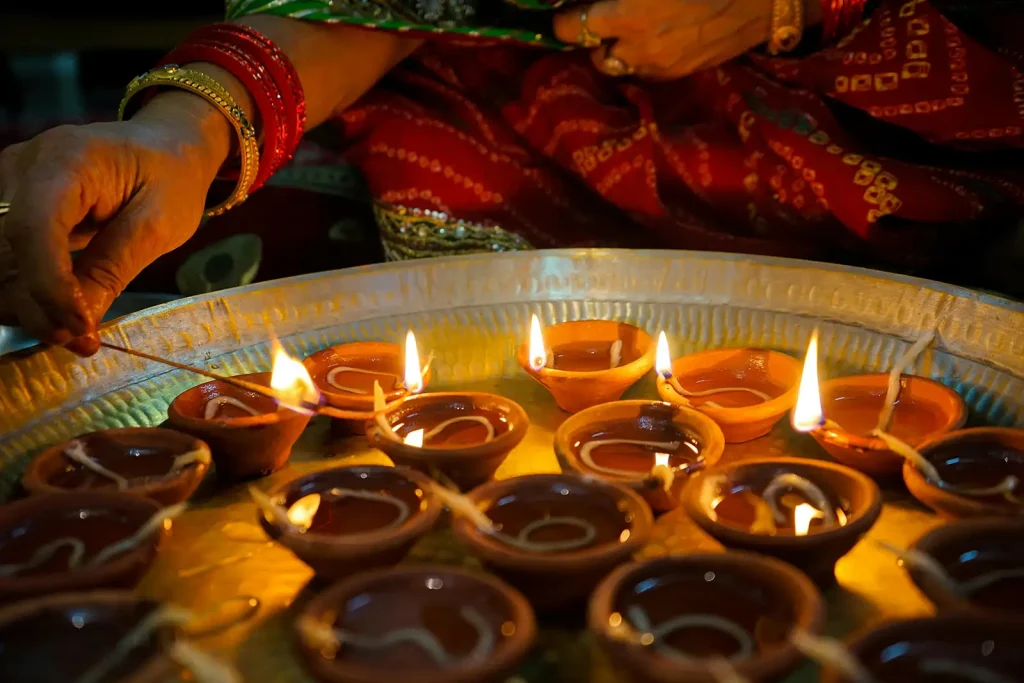
The journey toward official state recognition of Diwali has been gradual but determined. For many Indian Americans, especially those who grew up in earlier decades, Diwali was often a private family affair rather than a widely acknowledged public celebration. Rajeev Pahuja, raised in the suburbs of Hamden, Connecticut, recalls balancing American cultural norms like football with the intimate observance of Diwali at home. His personal experience as a member of an ethnic and religious minority motivated him to advocate for Diwali’s official recognition in Connecticut.
In 2024, Pahuja successfully lobbied for Connecticut to adopt Diwali as a state holiday, which took effect on October 1, 2025. He envisions the state becoming a “Diwali capital of the world,” joining its reputation for basketball and pizza. The legislative process was challenging, requiring persistent efforts to educate lawmakers about Diwali’s significance to millions of Americans. Despite progress, Pahuja acknowledges that awareness still needs to grow, particularly in smaller states.
Following Connecticut’s lead, California’s Governor Gavin Newsom signed legislation recognizing Diwali as a state holiday in 2025. California, home to the largest Indian American population in the U.S., sees this move as a natural acknowledgment of the community’s cultural contributions. Samir Kalra, a policy expert with the Hindu American Foundation, highlights how this formal recognition allows families to celebrate Diwali without the conflict of school or work obligations, fostering a stronger sense of inclusion.
The Hindu American Foundation played a key role in supporting the enactment of Diwali holidays in these states, providing community testimonies and advocacy that helped navigate the lengthy legislative processes. Kalra notes that these are not merely ceremonial resolutions but actual laws, signaling the community’s maturing political engagement and advocacy skills.
Pennsylvania was the first state to officially declare Diwali a state holiday in 2024, with Indian American legislator Arvind Venkat instrumental in drafting the bill. Venkat reflects on how Diwali was once a private celebration limited to close-knit communities but has since blossomed into a widely recognized event. Pennsylvania’s diverse South Asian population, including Nepali and Bhutanese communities who celebrate a parallel festival called Tihar, sees the holiday as a unifying cultural moment. Venkat emphasizes Pennsylvania’s historic identity as a welcoming state, aligning Diwali’s inclusive spirit with its founding values.
Beyond the South Asian Hindu community, Diwali resonates with Indian Muslims and others who appreciate its universal themes. Razin Karu, a Pennsylvania official, describes Diwali as a cultural bridge that brings people together through music, food, dance, and vibrant attire. The festival’s core message—the triumph of light over darkness, knowledge over ignorance, and hope over despair—holds universal appeal across religions and cultures.
Diwali, also known as Deepavali, is a major festival in Hinduism and other Dharmic traditions. It commemorates various mythological events, such as Lord Ram’s victorious return to Ayodhya, Lord Krishna’s defeat of the demon Narakasura, or the spiritual liberation of Lord Mahavira in Jainism. Sikhs celebrate Bandi Chhor Divas, marking the release of Guru Hargobind Ji from imprisonment. Despite differing religious narratives, the shared symbolism of light dispelling darkness unites these celebrations.
In India, Diwali is a week-long holiday marked by home cleanings, decorations, gift exchanges, new clothes, feasts, and widespread school closures. The U.S. recognition of Diwali as a state holiday, while not mandating closures of schools or government offices, represents a meaningful step toward acknowledging the cultural diversity of American society and the presence of South Asian Americans.
This milestone is more than symbolic; it reflects the evolving immigrant story and the increasing political and cultural integration of South Asian Americans. Official recognition of Diwali affirms that South Asians belong in the American mainstream and that their traditions enrich the nation’s multicultural fabric.
Looking ahead, advocates hope that more states will follow suit, expanding Diwali’s official status and promoting broader public understanding. Such recognition not only facilitates celebration but also fosters inclusivity and respect for religious and cultural diversity in America.
In conclusion, the official recognition of Diwali as a state holiday in Connecticut, Pennsylvania, and California marks a milestone for South Asian communities in the U.S. It embodies both the preservation of cultural heritage and the progress of immigrant integration, celebrating values that resonate universally—hope, light, and unity. As awareness grows, Diwali’s presence in American public life is poised to deepen, enriching the nation’s cultural landscape.